
SNU EYE CLINIC · PATIENT GUIDES
SMILE Aftercare at SNU Eye Clinic: Daily Activities and Preparing to Return Home
SNU Eye Clinic’s guidance on washing, makeup, exercise, alcohol and swimming after SMILE, with timing adjusted to your recovery. Learn about eye-drop hygiene, symptoms needing immediate care, and medicines, records and follow-up plans to prepare before leaving Korea.
After SMILE surgery, the basics are to avoid rubbing your eyes, use prescribed eye drops as directed, and resume activities according to your recovery. SNU Eye Clinic’s current guidance allows light activities from the following day but advises avoiding alcohol, smoking, swimming and saunas for 2 weeks. These times may vary with your progress, so follow the instructions given to you after surgery.
When can you wash your face, wear makeup and exercise?
Our guidance allows a light shower and light activities from the next day. Avoid pressing or rubbing your eyes and getting water directly into them. The table below summarizes the daily activities covered in our current SMILE Q&A.
| Activity | SNU Eye Clinic’s general guidance and what to check |
|---|---|
| Day of surgery | Rest after returning home; do not touch or rub your eyes |
| Light shower and makeup | Generally allowed from the next day; this excludes eye makeup. Keep water out of your eyes |
| Exercise | Check that light activity from the next day is appropriate for your recovery. Discuss sports involving a risk of impact to the eyes separately |
| Alcohol and smoking | Avoid for 2 weeks after surgery |
| Water activities, swimming, saunas and Korean bathhouses (jjimjilbang) | Generally allowed after 2 weeks; confirm when to resume based on your recovery |
| Hair perms and colouring | Generally allowed after 2 weeks; check your own recovery status |
Check your personal instructions for when to resume eye makeup. “Makeup from the next day” does not include eye makeup. Also avoid wiping forcefully or rubbing around your eyes.
This table is for SMILE surgery. Do not apply these washing or exercise schedules to ICL or cataract surgery. If you had another operation or an additional procedure, follow the instructions for that treatment. Our examination and surgery Q&A has guidance for each operation.
How should you use eye drops and artificial tears?
Use your prescribed drops at the frequency and for the duration specified for you. Do not stop them on your own because your eyes feel better, or replace them with someone else’s drops. Also confirm which artificial tears you were advised to use after surgery and how to use them.
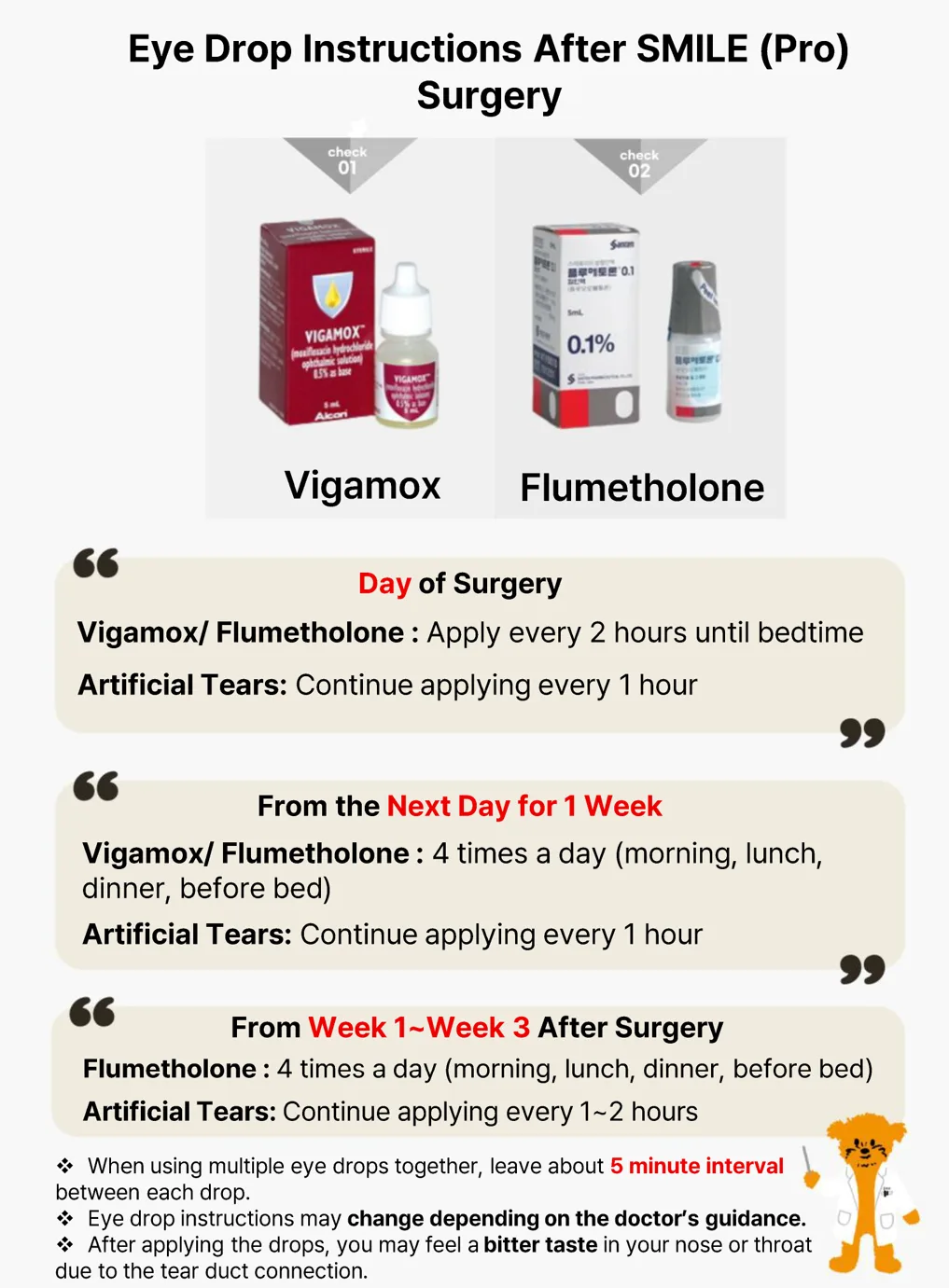
Wash your hands before applying drops, and keep the bottle tip from touching your eye, hands or any other surface. If you use several types of drops, ask about the order and spacing between doses and make a note of the instructions. Follow the product label and your prescription for storage and how long to use the product after opening. The FDA’s guide to eye drops also explains basic hygiene.
Take breaks during prolonged phone or computer use. If dryness or blurred vision worsens, adjust the time you spend on screens. It is also best to avoid smoky or dusty environments during recovery. ZEISS SMILE pro aftercare information explains the importance of screen breaks and avoiding eye rubbing.
Which symptoms should not wait until your next appointment?
Seek immediate eye care if your vision suddenly deteriorates, pain becomes severe, or symptoms worsen rather than improve. Do not keep waiting out a new symptom simply because you were told that some blurriness can occur early on.
When contacting the clinic, explain which eye is affected, when the symptoms began, how your vision and pain have changed, and which drops you are using. If severe symptoms develop while you are overseas or you cannot reach the clinic promptly, seek assessment at a nearby eye clinic or emergency service first. Do not delay medical care while waiting for a reply on a messaging app.
What should you prepare before returning home?
Before leaving Korea, check that you have attended the necessary initial follow-up appointments and understand how long to continue your drops and when you need further care. Follow-up examinations remain necessary even if your vision has improved.
- Note the type and date of surgery and the advice given at your appointments before departure.
- Check the names of your prescribed medicines, how to use them, how much you have left and how to store them.
- Confirm the next follow-up date and arrange eye care after returning home.
- Confirm your contact channel and the language you will use.
- If you need records for local care, ask whether they can be issued and in which language.
If you need records in a particular language or direct coordination with an eye clinic abroad, confirm what the clinic can provide first. Messenger enquiries cannot replace an in-person examination when one is needed.
If you cannot recall your postoperative instructions or need to clarify daily activities, call SNU Eye Clinic on +82-2-548-0201 (02-548-0201 within Korea) or use the contact channel provided to you. You can also enquire about routine follow-up appointments through our online appointment request.