
Choosing a SMILE pro clinic
What to ask about your eye examination, treatment options and care after you return home.
SNU Eye Clinic · Seoul, South Korea
Considering SMILE pro, ICL or cataract surgery in Korea? Read about the procedures, what to look for in a quote and how to plan your visit and recovery.
Gangnam, Seoul · Sinsa Station, Exit 6 · English enquiries
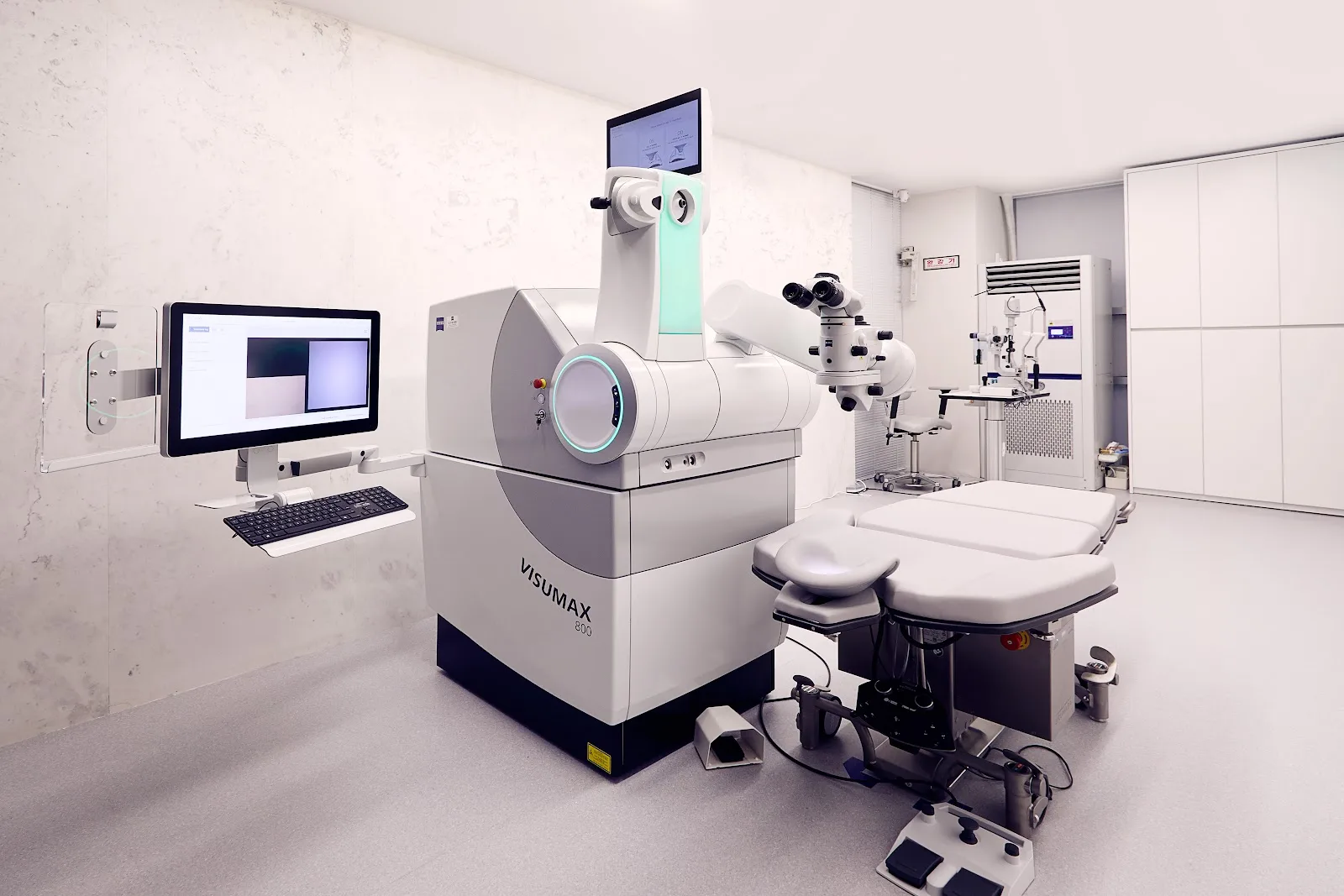
What to ask about the surgeon, eye tests and care after surgery.
What to ask about your eye examination, treatment options and care after you return home.
Find out how your eye measurements and lens choice affect the timing of ICL surgery.
How the procedures work and what determines whether they are suitable for your eyes.
Understand the differences between the procedures and what your eye tests can tell you.
Compare how the procedures work, the eye tests you will need and the risks of each.
Learn what the examination needs to assess beyond your prescription, and which alternatives may be available.
What to ask about implantable lens models, placement, sizing and follow-up, and how SNU Eye Clinic plans ICL surgery.
What to look for in a quote, including whether it covers both eyes, the lens type and follow-up visits.
Check what is included in a SMILE or SMILE pro quote and which fees may be charged separately.
Compare lens types, costs for one or both eyes, and the care included in an ICL quote.
What to expect as you recover and how to prepare for your journey home.
If your examination and surgery are planned for the same day, we recommend a stay of at least three days in Korea. Arrange a postoperative check before departure. ICL lens orders may require a longer stay, so discuss the lens schedule before booking travel.
Know what to expect after SMILE, when to discuss returning to work and what to prepare before leaving Korea.
Planning an ICL lens order before your trip →
ICL aftercare at SNU Eye Clinic: when to resume daily activities, which follow-up visits to plan and what to check before flying home.
SNU Eye Clinic explains myopic regression, assessment of vision changes after SMILE and what to consider if reading becomes more difficult with age.
Plan your examinations, lens selection, visits and recovery.
What to expect from cataract examinations and surgery at SNU Eye Clinic, with questions about lenses, visit dates, costs and insurance.
SNU Eye Clinic explains everyday cataract aftercare, activity timings, follow-up visits and symptoms that need medical attention.
You'll find SNU Eye Clinic on the 3rd and 12th floors of ICT Tower, 624 Gangnam-daero, Gangnam-gu, Seoul, near Exit 6 of Sinsa Station. You can call us on +82-2-548-0201.
We provide interpreting in English, Japanese, Chinese, Russian and Mongolian at no extra charge. Tell us your preferred language when arranging your visit.
Before your appointment, contact the clinic to confirm which floor to visit and the language for your consultation. Our official website is snuseoul.com; check the name and address if you come across a similarly named clinic.
If you need to check a clinic's status for treatment in Korea, foreign-patient registration and service accreditation are separate schemes. Check the current listing or certificate for the specific clinic.
Answers to common questions about eye examinations, preparing for surgery, recovery and follow-up. These are general clinic instructions. Your surgeon may adjust your medicines and recovery schedule to suit your procedure and how your eyes heal.
The clinic’s original Q&A refers to private medical insurance in Korea that reimburses eligible medical expenses. Coverage depends on your policy and when you took it out. Ask your insurer about coverage and the documents needed for a claim. If you need documents from the clinic, let the staff know when you visit.
The clinic usually operates on one eye at a time. The first eye is checked 1–2 days after surgery for discomfort or complications before surgery on the other eye is arranged. Operating on both eyes on the same day may be possible in some cases, but the surgeon will decide whether it is appropriate for you.
Keep water out of your eyes for the first 3 days and clean your face with a damp towel. Face washing, showering and makeup can usually resume after 3 days. Wait about 2 weeks before having your hair permed or dyed, smoking, drinking alcohol, swimming, or visiting Korean bathhouses (jjimjilbang) and saunas.
Do not touch or rub your eyes during the first week, and follow your surgeon’s advice afterwards. Wear the supplied plastic eye shield while sleeping for 1 week. Exercise can usually resume after 1 week, depending on your recovery.
Allow about 2 hours to assess presbyopia and cataracts. Your pupils may need to be dilated with eye drops, which can make driving difficult that day. Please use public transport or arrange for someone to take you home.
Before your visit, stop wearing soft contact lenses for 3 days, rigid contact lenses for 7 days, and orthokeratology (overnight reshaping) lenses for 1 month.
Starting 2 days before surgery, use the antibiotic eye drops prescribed for you 4 times a day: morning, midday, evening and bedtime. Follow your own prescription if it differs. Avoid heavy drinking and get a good night’s sleep before surgery.
LASIK, LASEK and SMILE may be performed on the same day if the examination confirms that you are suitable. Allow about 4 hours for the examination and surgery together. For ICL, a lens of the correct size must also be available in Korea. If a lens needs to be ordered, this can take up to about 2 weeks. Confirm availability with the clinic before making travel plans.
The clinic’s general vision-correction schedule is one visit within the first week, another at 1 month, and annual checks after that. You may need additional visits if you have symptoms or your eye condition requires them. Follow the individual schedule given to you for your procedure.
Cosmetic contact lenses can be worn after SMILE or ICL, but ask the clinic when it is safe for you to start wearing them again. Coloured lenses, including circle lenses, may have low oxygen permeability and can contribute to dry eye or conjunctivitis. Keep wearing time short, use artificial tears as instructed, and handle the lenses carefully to avoid scratching your eyes.
The clinic’s Korean Q&A says that flying after LASIK, LASEK, SMILE or ICL may be possible even on the day of surgery. Your departure still needs to be planned around your postoperative checks, so confirm your flight date with the clinic before booking.
If your examination and surgery are planned for the same day, this patient guide recommends staying in Korea for at least 3 days and having a postoperative check before departure. Cabin air is dry, so use artificial tears as instructed during the flight.
Your eyes may feel sore or watery, and your vision may be blurred immediately after surgery. After 3 days, you can usually wash your face gently and shower without pressing on your eyes. Normal face washing and makeup, including eye makeup, can usually resume after 1 week. Do not rub or press your eyes for 1 week, and wear the supplied plastic eye shield while sleeping during that week.
Wait 2 weeks before drinking alcohol, smoking, having your hair permed or dyed, or visiting public bathhouses or swimming pools. During recovery, avoid activities that could injure your eyes, such as ball games and combat sports. Light exercise is usually possible after 2 weeks and strenuous exercise after 1 month. Follow your surgeon’s advice if your recovery requires different timings.
Use only the eye drops prescribed for you by the clinic. The clinic’s Q&A gives the following schedule; confirm the exact medicines and instructions on your own prescription before using them.
The day before surgery: use prescribed Vigamox 4 times — morning, midday, evening and bedtime. On the day of surgery: use the clinic-prescribed preoperative drops 3–4 times at 15-minute intervals, starting 1 hour before surgery.
Do not wear makeup or sunscreen on surgery day; toner and lotion are permitted. Do not drive yourself. Bring sunglasses or a hat in case your eyes are sensitive to light afterwards. Wear the protective glasses or eye shield while sleeping for 1 week after surgery, and avoid rubbing or pressing your eyes.
ICL assessment has two stages. Allow about 2 hours for the first examination and 3–4 hours for the more detailed second examination used to order your lens. Before the examinations, stop wearing soft contact lenses for 3 days, rigid contact lenses for 7 days, and orthokeratology (overnight reshaping) lenses for 1 month.
Your pupils may need to be dilated during the examination. This can cause glare and light sensitivity for about half a day afterwards, so do not drive after the examination.
In the early stages of recovery, distance vision may improve before near vision. Close-up tasks can remain blurry or out of focus, and your sense of distance may feel different. Vision often improves gradually over 2–3 weeks, although it may take about 1 month; recovery varies from person to person.
Use your prescribed eye drops on schedule and artificial tears as instructed, even if your eyes do not feel dry. If your vision gets worse, contact the clinic to have it checked.
Rest at home on surgery day and do not touch or rub your eyes. Light makeup without eye makeup, showering and exercise can usually resume the next day if your recovery allows. Avoid smoking and alcohol for 2 weeks. Swimming, water activities, saunas, Korean bathhouses (jjimjilbang), hair perming and hair dyeing should also wait 2 weeks. Follow your surgeon’s instructions if your recovery requires a different schedule.
The procedure for both eyes takes about 10–15 minutes. Numbing eye drops are used to reduce discomfort during surgery. Tell the surgical team if you feel pain or discomfort, as the experience varies between patients.
Do not drive yourself. Bring sunglasses or a hat for light sensitivity afterwards. Avoid perfume and strong fragrances, including fabric fresheners, as the equipment is sensitive to them. Do not wear makeup; toner and lotion are permitted. Avoid wearing a hooded top, as you will be lying down during surgery.
Stinging, pain or watering can occur during the first 4–5 hours after surgery as the numbing drops wear off. The clinic’s Q&A mentions pain relief such as Tylenol; ask the clinic which medicine is appropriate for you. If pain is severe or getting worse, contact the clinic promptly.
The clinic generally recommends considering surgery from age 19, once eye growth has stabilised and your prescription has been unchanged for the past 1 year. In your 50s or 60s, developing presbyopia or cataracts can affect satisfaction after LASIK, LASEK or SMILE. Discuss these conditions and the available treatment options with the clinic when choosing a procedure.
Mild conjunctivitis or a small stye may not prevent an examination or surgery, but a doctor must assess your eyes first. If the inflammation is severe or a large stye needs treatment, have it treated before arranging the examination or surgery.
A small amount, such as one drink, may be acceptable, but avoid drinking enough to affect how you feel the next day. Heavy drinking can affect your condition and make it harder to follow instructions during testing, which can affect the accuracy of the examination.
Stop wearing soft contact lenses for 3 days, rigid contact lenses for 7 days, and orthokeratology (overnight reshaping) lenses for 1 month. Bring your usual glasses. Allow 2–3 hours for the examination and consultation, or about 4 hours if surgery is planned for the same day. Dilating eye drops may make driving difficult, so please use public transport or arrange for someone to take you home.
If you have severe or worsening pain, or your vision gets worse, contact the clinic promptly rather than waiting for your next appointment.